Photographs Don't Lie — and Neither Does the Data Hidden Inside Them
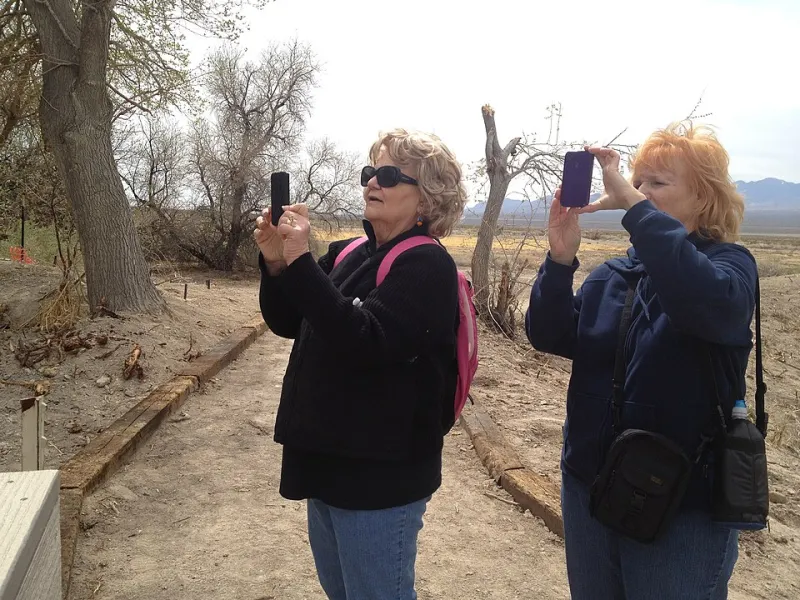
Photo: U.S. Fish and Wildlife Service Headquarters, Public domain, via Wikimedia Commons
A photograph, at its most fundamental level, is a record of light. What most people do not realize is that the modern digital image is also a record of something far more sensitive: the precise circumstances under which it was taken. Embedded within the file itself — invisible to the naked eye, yet trivially readable by anyone with the right software — is a structured data payload that can include the exact GPS coordinates of where you were standing, the make and model of your device, the date and time down to the second, and even technical settings that can serve as a unique device fingerprint.
This payload is governed by a technical standard called EXIF, short for Exchangeable Image File Format. Originally designed to help photo-editing software understand how an image was captured, EXIF data has become, in the hands of malicious actors, one of the most reliable and underappreciated tools for identifying, locating, and harassing private individuals.
What EXIF Data Actually Contains
The EXIF specification allows for dozens of distinct data fields. In a photo taken on a modern iPhone or Android device, a single image file might record the following without the photographer's explicit awareness:
- GPS latitude and longitude, accurate to within a few meters
- GPS altitude, which can help distinguish a ground-floor apartment from a third-floor unit
- The device's make, model, and software version
- A unique camera serial number in some cases
- The date and time of capture, including time zone offset
- Lens focal length and aperture settings
- Thumbnail previews of the original image, which sometimes persist even after the main image has been cropped or edited
The thumbnail issue deserves particular attention. Security researchers have demonstrated cases in which a user cropped or edited a photo to remove identifying visual content — a street sign, a house number, a face — yet the original uncropped thumbnail remained embedded in the file's metadata, effectively preserving exactly what the user believed they had removed.
From Vacation Snapshot to Doxxing Incident
The practical consequences of metadata exposure are not theoretical. Documented cases across the United States illustrate how real the risk is for ordinary people.
In one widely cited incident, a domestic violence survivor who had relocated to a new city posted photos on a public social media account. The images themselves showed nothing geographically identifying — indoor scenes, a pet, a coffee mug. But the EXIF data embedded in each file recorded GPS coordinates corresponding to her new apartment. A former abuser, using freely available metadata-reading tools, extracted the coordinates and identified her building within hours of the posts going live.
Journalists and security researchers tracking extremist activity online have repeatedly noted that members of fringe groups routinely extract EXIF data from photos shared by targets to establish home addresses and workplaces. In several documented harassment campaigns, the initial point of compromise was a single image posted to a public forum.
Public figures are equally exposed. A politician who posted a photo taken in their home inadvertently disclosed the neighborhood. A financial commentator's metadata confirmed the city they claimed not to reside in for tax purposes. The pattern is consistent: the image is scrutinized for visual cues, but the metadata is often where the most precise intelligence lives.
Why Platform Privacy Settings Are Not Sufficient
Many users operate under the reasonable assumption that uploading a photo to a major platform — Instagram, Facebook, X (formerly Twitter) — automatically strips its metadata. This assumption is partially correct but dangerously incomplete.
Large consumer platforms do, in most cases, strip EXIF data from publicly visible copies of uploaded images. However, this stripping does not occur universally, does not apply to all file formats equally, and does not happen at the moment of upload in all cases. More critically, it does nothing to protect images shared through other channels: email attachments, direct messages on platforms that do not strip metadata, file-sharing services, Discord servers, Reddit image uploads, or personal websites.
Researchers have also documented instances in which platform stripping was inconsistently applied — specific file formats, edge-case upload methods, or API-based sharing sometimes bypassed the stripping process entirely. Relying on a third party to sanitize your images before they reach an audience is a fragile security posture.
The Technical Mechanics of a Metadata Extraction Attack
An attacker attempting to harvest location data from a target's photos does not require specialized skills or expensive tools. The process is straightforward enough that it warrants understanding from a defensive standpoint.
Free command-line utilities such as ExifTool — a legitimate, widely used application maintained by an independent developer — can read, write, and strip EXIF data from thousands of image files in seconds. Web-based services allow anyone to upload an image and receive a full metadata report without installing any software. Browser extensions can automate the extraction of metadata from images encountered during ordinary web browsing.
In a targeted scenario, an adversary who has identified a person of interest needs only a handful of images from that individual's public online presence to begin constructing a geographic and behavioral profile. Timestamps reveal working hours and sleep patterns. Repeated GPS coordinates identify a home address and regular locations. Device information narrows down the hardware ecosystem and can sometimes correlate with other data sources.
Practical Defenses: Stripping Metadata Before You Share
The most reliable defense is also the most direct: remove metadata from images before they leave your device.
On Windows, the built-in file properties dialog includes a "Remove Properties and Personal Information" option accessible by right-clicking any image file. This strips most EXIF fields, though it is worth verifying with a metadata viewer afterward.
On macOS, the Preview application does not strip metadata natively, but ExifTool — available via Homebrew — provides reliable command-line stripping. The syntax exiftool -all= filename.jpg removes all metadata from a single file.
On iOS, the native Photos app allows users to disable location access for the camera entirely under Settings > Privacy & Security > Location Services > Camera. Setting this to "Never" prevents GPS coordinates from being embedded at capture. For images already taken, third-party apps such as Metapho or Photo Investigator allow per-image metadata review and removal before sharing.
On Android, camera location settings vary by manufacturer, but most devices include a location toggle within the camera app's settings menu. Google Photos offers a metadata-stripping option when sharing images directly through the app, though this applies only to that sharing pathway.
For users who regularly share images in sensitive contexts — journalists, activists, survivors of domestic abuse, or anyone with reason to limit their geographic exposure — ExifTool remains the most comprehensive cross-platform solution. Batch processing entire directories of images before uploading them to any public channel takes seconds and eliminates the uncertainty of relying on platform-side stripping.
A Habit Worth Building
The broader lesson embedded in the EXIF problem is one that recurs throughout digital security: the information you believe you are sharing is rarely the only information that travels with it. Files carry histories. Images carry coordinates. Convenience features designed to improve your experience frequently do so by recording details about you that persist long after the moment feels past.
Building a habit of metadata hygiene — checking before sharing, stripping before posting, disabling location tagging at the camera level — costs very little in time and effort. The alternative is continuing to publish a precise record of where you live, where you work, and where you spend your time, attached to every image you share, readable by anyone who thinks to look.