One Breach, Every Door: How a Single Stolen Password Unravels Your Entire Digital Identity
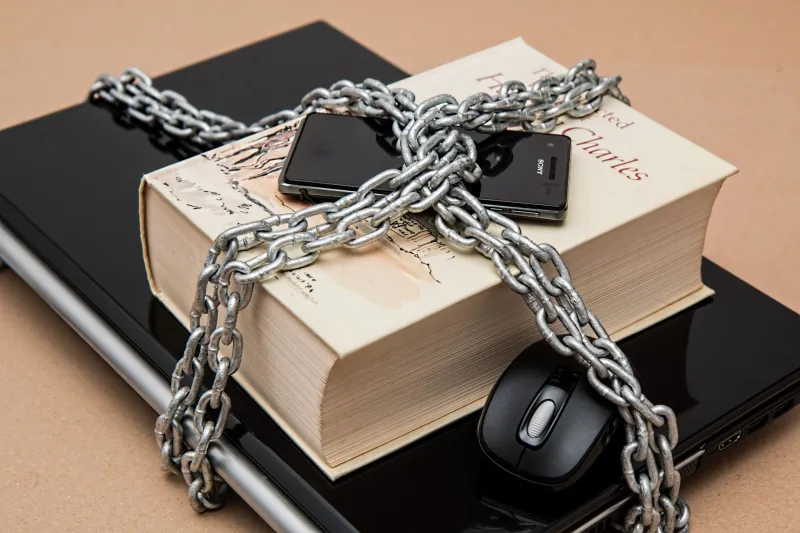
Imagine a locksmith who cuts an identical key for every lock in your home, your car, your office, and your safe-deposit box. The convenience is undeniable — until someone steals that one key. What follows is not a single loss. It is a comprehensive surrender.
This is the precise dynamic playing out across millions of American households every year, and it has a name in the security community: credential cascading. A password compromised in one breach becomes a passkey to a chain of accounts the victim never imagined were connected. The consequences range from drained bank accounts to years of identity-restoration headaches. Yet the behavior that makes it possible — reusing the same password across multiple services — remains stubbornly common.
The Scale of the Problem
The numbers are difficult to dismiss. According to research published by Google in collaboration with Harris Poll, roughly 65 percent of Americans admit to reusing passwords across multiple sites. A separate study by the cybersecurity firm SpyCloud found that among the billions of credentials recovered from criminal marketplaces and breach compilations in recent years, the majority of individuals whose data appeared in more than one breach used identical or near-identical passwords across those exposures.
When attackers obtain a fresh batch of credentials — whether from a breached retail loyalty program, a compromised streaming service, or a leaked fitness app — their next move is rarely manual. Automated tools known as credential-stuffing engines attempt those username-and-password combinations against hundreds of other services simultaneously. The process is fast, largely undetectable at the individual account level, and extraordinarily effective. Industry estimates suggest that credential-stuffing attacks succeed at converting stolen logins into unauthorized access roughly one to three percent of the time. That figure sounds small until you consider that a single breach can expose tens of millions of records.
Why People Reuse Passwords — Even When They Know Better
The behavioral science here is well-documented and, frankly, sympathetic. The average American adult manages somewhere between 70 and 100 online accounts. Expecting each of those accounts to carry a unique, complex password without any technological assistance is an unrealistic demand on human memory. Cognitive load — the mental effort required to store and retrieve distinct information — is finite. When faced with yet another mandatory account creation, most people default to what they already know.
There is also a phenomenon researchers describe as optimism bias at work. People consistently underestimate the likelihood that their data will be involved in a breach. News coverage of large-scale incidents — a major retailer, a healthcare network, a government database — can paradoxically reinforce this bias. The breaches that make headlines feel distant and institutional, not personal. The logical conclusion many users draw, even unconsciously, is that their smaller accounts are beneath a criminal's notice.
That conclusion is wrong. Attackers are not selective. They are systematic.
Mapping the Cascade
Understanding how a credential cascade unfolds requires tracing the typical path an attacker follows once a valid username-and-password pair is confirmed.
The first target is almost always email. An active email account is not merely a communication channel — it is the administrative backbone of a person's entire digital life. Password-reset links for virtually every other service route through it. Once an attacker controls an inbox, they can methodically trigger resets on banking portals, brokerage accounts, healthcare platforms, and social media profiles. The original stolen password may never even be needed for those secondary accounts; the email account alone is sufficient to seize them.
From there, the cascade can extend in several directions. Financial accounts — checking, savings, investment, and credit card portals — become accessible either through direct login or through the reset mechanism now under the attacker's control. Social media accounts, once hijacked, are frequently used to run scams targeting the victim's contacts, amplifying the damage beyond the individual. Healthcare portals expose sensitive personal and insurance data. Retail accounts stored with payment card information enable fraudulent purchases.
The entire sequence can unfold within hours of the initial compromise. Victims often do not discover the breach until they are locked out of their own accounts or receive a notification from their bank.
A Prioritization Framework: Where Unique Passwords Are Non-Negotiable
Not every account carries equal risk. While the ideal posture is a unique credential for every service — achievable with a reputable password manager — a practical prioritization framework helps Americans focus their most urgent attention where the exposure is greatest.
Tier One — Absolute Priority: These accounts must never share a password with any other service.
- Primary email accounts. As described above, email is the master key to everything else. A strong, unique password combined with phishing-resistant two-factor authentication is essential.
- Financial accounts. Online banking, brokerage platforms, and credit card portals carry direct monetary risk. Compromise here can result in immediate financial loss.
- Identity and government services. The IRS's online portal, the Social Security Administration's MySocialSecurity account, state DMV platforms, and benefits accounts hold data that fuels identity theft and tax fraud.
- Password managers themselves. If you use a password manager — and you should — its master credential requires particular care. It cannot be reused anywhere.
Tier Two — High Priority: These accounts carry significant secondary risk.
- Secondary email accounts and phone carrier portals. Attackers who cannot access a primary inbox will probe secondary addresses and carrier accounts, which can be used to intercept two-factor authentication codes via SIM-swap or account-takeover techniques.
- Healthcare and insurance portals. These hold sensitive personal data that supports medical identity theft.
- E-commerce accounts with stored payment methods. Amazon, major retailers, and payment platforms like PayPal store card data and shipping addresses that enable rapid financial fraud.
Tier Three — Remaining Accounts: Streaming services, loyalty programs, and low-stakes applications carry lower direct risk but can still serve as entry points for credential-stuffing campaigns. Unique passwords here reduce the surface area attackers can exploit.
Breaking the Chain
The most effective structural defense against credential cascading is a password manager. Applications such as those offered by reputable vendors generate and store cryptographically random, unique passwords for every account, reducing the human memory problem to a single master credential. Surveys consistently show that password manager adoption in the United States, while growing, remains well below majority usage — meaning the majority of Americans remain vulnerable to the cascade effect.
Beyond unique credentials, enabling multi-factor authentication on Tier One and Tier Two accounts dramatically raises the cost of an attack. Even if a valid password is confirmed through credential stuffing, an attacker who cannot satisfy a second authentication factor is effectively stopped at the door.
Finally, periodic monitoring of breach databases — services like Have I Been Pwned allow users to check whether their email address has appeared in known breach compilations — provides early warning that credentials may be in circulation.
The Larger Lesson
Credential cascading is not a theoretical vulnerability. It is a documented, repeatable attack pattern that exploits the gap between how humans naturally manage information and how security systems are designed to function. The locksmith analogy holds: the problem is not that any individual lock is weak. The problem is the single key.
The solution does not require technical sophistication. It requires a shift in habit — and a clear-eyed understanding of what is actually at stake when that one key goes missing.