Home, Unguarded: How Your Smart Devices Signal to Strangers That Nobody Is There
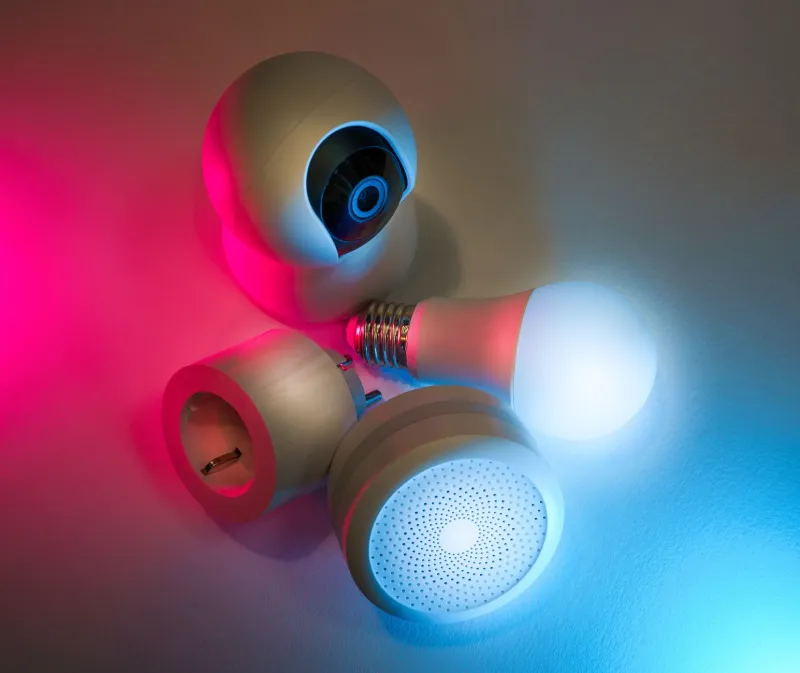
The pitch is familiar: a connected home is a safer home. A doorbell camera that lets you see who is at the door from a thousand miles away. A thermostat that learns your schedule and adjusts accordingly. Lighting systems that respond to voice commands or smartphone taps. These products are sold, almost universally, as security enhancements — as a technological moat between your household and the outside world.
What the marketing rarely addresses is the inverse problem. The same data these devices collect to make your home feel intelligent also makes your absence legible — not just to you, but potentially to anyone with the means, motive, or access to intercept it.
The Behavioral Fingerprint Your Devices Are Building
Smart home devices are, at their core, data collection platforms. A connected thermostat like Google Nest or Ecobee does not simply regulate temperature; it logs when occupancy sensors detect movement, when the system switches from "home" to "away" mode, and how those patterns repeat across days and weeks. Over time, this data resolves into something remarkably precise: a schedule of your life.
Doorbell cameras compound the problem. Ring, Nest, and similar devices record not only who approaches your front door but when the door is opened, when motion stops registering in the early morning, and when activity resumes in the evening. Activity logs stored in cloud accounts — and accessible through associated apps — can reveal, to anyone who gains access to that account, a near-complete map of your household's comings and goings.
Smart plugs, connected lighting systems, and even robotic vacuums contribute additional data points. Automated schedules designed to simulate occupancy — lights turning on at 7 p.m., a vacuum running at noon — can paradoxically expose absence when the pattern is too consistent, too mechanical, to reflect genuine human behavior.
Who Has Access to This Data?
The question of access operates on several levels, and each level carries its own risk profile.
At the most immediate level, the device manufacturer holds the data. Companies like Amazon, Google, and a constellation of smaller IoT vendors store usage logs, event histories, and behavioral data on cloud servers. Their privacy policies — frequently long, dense, and subject to revision — govern how that data is retained, shared with third parties, and potentially handed over in response to law enforcement requests or civil subpoenas. A 2023 disclosure by Amazon confirmed that Ring had, on multiple occasions, provided footage to law enforcement without a warrant and without user consent, underscoring that the data you generate does not remain exclusively yours.
At a second level, the accounts tied to these devices represent a significant attack surface. Credential stuffing attacks — in which stolen username-and-password combinations from unrelated breaches are tested against popular services — have repeatedly compromised smart home accounts. A threat actor who gains access to a Ring or Nest account does not merely acquire footage of your front porch; they acquire a structured record of when your home is occupied.
At a third level, the devices themselves communicate over your home network and, in many cases, over the public internet. Poorly secured devices running outdated firmware may be discoverable through tools like Shodan, a search engine that indexes internet-connected devices. Researchers have demonstrated repeatedly that misconfigured smart cameras and other IoT hardware can be accessed without authentication by anyone who knows where to look.
The Physical-Security Dimension
Cybersecurity discussions typically concern themselves with digital assets: financial accounts, personal data, intellectual property. The smart home vulnerability is notable because it bridges the digital and physical domains. The consequence of a compromised thermostat schedule or a leaked doorbell activity log is not a drained bank account — it is a burglarized house.
Property crime in the United States, while declining over the long term, remains prevalent. The FBI's crime statistics consistently show that the majority of residential burglaries occur when occupants are away from home. Historically, burglars have relied on physical observation — watching a house, noting when cars are absent, when lights go dark — to assess opportunity. Smart home data, if accessible, automates and accelerates that reconnaissance.
The threat is not purely theoretical. Security researchers and journalists have documented cases in which leaked smart home data was used to identify vulnerable properties. The attack surface is real, even if large-scale exploitation remains relatively uncommon.
Configuring Your Devices Without Surrendering Your Privacy
The solution is not necessarily to abandon connected home technology. It is to approach that technology with deliberate configuration choices that limit what data is generated, who can access it, and how it can be used.
Audit your account credentials. Every smart home account should be protected by a strong, unique password and multi-factor authentication. Use an authenticator application rather than SMS-based verification where possible. If a device account was created years ago with a password you have since reused elsewhere, change it now.
Review data-sharing and retention settings. Most major platforms allow users to limit how long activity logs and footage are retained. Reducing retention windows limits the historical record available to anyone who gains unauthorized access. Disable third-party data sharing where the option exists.
Segment your network. Place smart home devices on a separate network segment — a guest network or a dedicated IoT VLAN — isolated from computers, phones, and other devices that hold sensitive data. This limits the lateral movement available to an attacker who compromises a device.
Update firmware consistently. Manufacturers issue firmware updates that patch known vulnerabilities. Enable automatic updates where available, and periodically verify that devices are running current software.
Reconsider automation patterns. Schedules designed to simulate occupancy are only effective if they are irregular and unpredictable. A light that turns on at precisely 7:04 p.m. every evening signals automation, not presence. Introduce randomization where your platform permits it.
Be selective about cloud dependency. Some devices can operate in a local-only mode, storing data on a home server rather than a manufacturer's cloud infrastructure. This approach requires more technical comfort but substantially reduces exposure to cloud-side breaches and data-sharing arrangements.
Reframing the Risk
The convenience of the smart home is genuine. The ability to monitor your property remotely, to receive alerts when a package arrives, to reduce energy consumption through intelligent scheduling — these are meaningful benefits. The argument here is not that those benefits are illusory, but that they carry costs that are rarely disclosed at the point of purchase.
Every device added to a connected home is a new data source, a new account to secure, and a new potential entry point for someone with reasons to know when you are not home. Treating smart home security as an extension of broader digital hygiene — rather than a separate, purely physical concern — is the posture that reflects the actual risk landscape.
The devices watching your home are also, in a meaningful sense, watching your habits. Who else is watching them is a question worth taking seriously.